Service benefit
This is the core Lifeline support. It can lower eligible phone or internet costs under current federal rules.
Utah residents may find a free or discounted tablet through a participating provider offer, but there is no guaranteed federal or statewide tablet giveaway. The safest route is to check Lifeline eligibility through the National Verifier, then compare participating companies for your ZIP code and exact address. Utah SNAP, Medicaid, SSI, federal housing assistance, qualifying veterans benefits, income, or certain Tribal programs may establish eligibility. A tablet still depends on provider rules, local service, stock, device condition, activation, shipping, and any copay.
A “free government tablet in Utah” is usually a provider promotion connected with low-income phone or internet service, not a tablet sent directly by Utah or the federal government. Lifeline is active, while ACP ended and households stopped receiving ACP discounts on June 1, 2024. Verify eligibility first and treat the device as a separate, conditional offer.
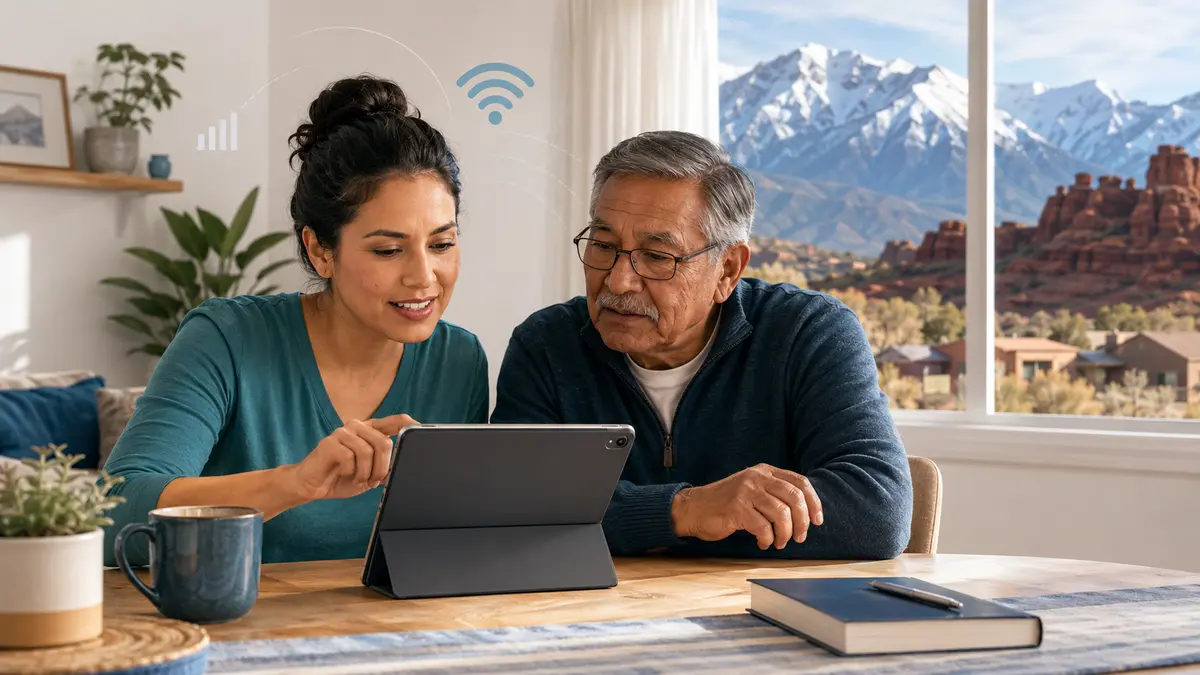
Check whether your household qualifies for Lifeline through Utah SNAP, Utah Medicaid, SSI, Federal Public Housing Assistance, Section 8, Veterans Pension, Survivors Benefit, qualifying Tribal assistance, or the federal income limit. Apply through the National Verifier. After eligibility is confirmed, use your ZIP code and physical service address to identify participating companies. Ask each company whether it currently offers service only, a phone, a discounted tablet, a refurbished tablet, or a phone-and-tablet option.
Guaranteed: eligible households can receive the Lifeline service discount under current rules after approval and enrollment with a participating company.
Possible: a provider may have a basic Android tablet, refurbished device, reduced-price tablet, or bundle.
Provider-dependent: device stock, model, condition, network coverage, activation, shipping, return terms, copay, and whether any tablet is offered at all.
Free Tablet Apply is an independent informational website. It does not distribute tablets, process Utah benefit applications, approve Lifeline, represent the FCC or USAC, or control provider inventory. Do not send this website your Social Security number, EBT PIN, UtahID password, bank login, banking details, or benefit-portal credentials.
The search phrase does not describe one universal government device program. In Utah, it usually connects three separate things: a household’s participation in a qualifying benefit, federal Lifeline eligibility, and a participating company’s optional device promotion. Passing one stage does not guarantee the next.
The Affordable Connectivity Program ended because funding ran out. Households stopped receiving ACP discounts on June 1, 2024. A page or social media ad that presents “ACP 2026 enrollment” as active is outdated or misleading. Lifeline remains active, but its primary purpose is a monthly discount on qualifying phone, internet, or bundled service.
The Affordable Connectivity Program was a federal broadband discount. It ended in 2024 and is not a current Utah tablet application route.
An active federal FCC program administered by USAC that lowers eligible household phone or internet service costs. It does not promise a tablet.
The eligibility system Utah residents generally use to confirm identity, address, program participation or income, and the one-benefit-per-household rule.
A free tablet with EBT or Medicaid in Utah means those benefits may help prove Lifeline eligibility. The EBT card or Medicaid program itself is not a tablet voucher. A separate provider must serve the address and offer a device under its current terms.
I could not confirm a separate official statewide free tablet program for Utah residents. Most realistic options are Lifeline service, provider device promotions, discounted or refurbished devices, local libraries, nonprofit support, Utah Broadband Center resources, community action agencies, and disability-focused assistive technology services.
Utah agencies administer important programs, but their roles should not be mixed together. The Department of Workforce Services manages eligibility work for SNAP and many Medicaid applications. The Utah Department of Health and Human Services oversees Utah Medicaid. The Utah Broadband Center works on connectivity and digital access. None should be described as automatically issuing a general-purpose tablet to every low-income resident.
This page can confirm: Lifeline is active; SNAP and Medicaid are recognized eligibility routes; Utah uses the general federal Lifeline application route; provider participation can be checked by location; and Utah has official digital access, library, assistive technology, Tribal, and community-support resources.
This page cannot confirm: your approval, a tablet in stock, a particular Android tablet, an iPad or Samsung device, a zero-dollar copay, same-day approval, same-day shipping, delivery time, or coverage at a specific address.
Utah households can qualify for Lifeline through participation in an accepted program or through income. Use the applicant’s legal name, date of birth, and physical home address exactly as they appear on current records. Only one Lifeline benefit is generally allowed per economic household, meaning people who live together and share income and expenses.
| Eligibility route | Utah relationship | Important limit |
|---|---|---|
| SNAP / EBT | Utah DWS administers SNAP, and approved households receive benefits through the Utah Horizon Card. | The card proves access to SNAP funds, not a tablet entitlement. Never share its PIN. |
| Utah Medicaid | Utah Medicaid participation can qualify a household for Lifeline. DWS handles eligibility applications and may request proof. | A Medicaid card is not a device coupon. Use a current official notice if automatic matching fails. |
| SSI | Supplemental Security Income is a qualifying federal program for Lifeline. | SSI is different from general Social Security retirement or SSDI alone. |
| Federal housing help | Federal Public Housing Assistance, including qualifying Section 8 assistance, may establish eligibility. | Use current public housing authority or federal program documentation. |
| Veterans benefits | Veterans Pension and Survivors Benefit are accepted routes. | General veteran status, a military ID, or VA health care alone should not be assumed to qualify. |
| Household income | A household may qualify when income is at or below the current Lifeline threshold. | Use the current federal limit and accepted, recent income documents. |
| Tribal programs | Residents on qualifying Tribal lands may use accepted programs such as Tribal TANF, Bureau of Indian Affairs General Assistance, FDPIR, or certain Head Start income eligibility. | Living in Utah or being a Tribal member alone does not automatically establish the enhanced benefit. Address and program rules apply. |
Utah recognizes eight distinct Tribal nations through its Division of Indian Affairs. Residents connected with the Ute Indian Tribe, Navajo Nation, Paiute Indian Tribe of Utah, Goshute communities, Northwestern Band of the Shoshone Nation, San Juan Southern Paiute Tribe, or Ute Mountain Ute communities should verify whether the physical residence is on qualifying Tribal lands and which program document is accepted.
Utah SNAP helps low-income households buy food. The Department of Workforce Services uses myCase for online applications and benefit management. Approved households use the Utah Horizon Card. SNAP participation can support a Lifeline application, but it does not guarantee a free tablet, phone, provider approval, inventory, or shipping.
Possibly through a provider promotion after Lifeline eligibility is confirmed. Your Utah SNAP notice may prove eligibility, but the Horizon Card is not a tablet voucher. Check the provider, service area, device condition, copay, activation, and shipping before accepting an offer.
A common Utah-specific problem is confusing the EBT card with the eligibility document. The National Verifier may need an official benefit letter showing the applicant or dependent’s name, SNAP program name, issuing agency, and a current issue date or future expiration date. A photo of the card alone may not show enough information. Read the tablet with EBT guide for the relationship between SNAP and provider offers.
Utah Medicaid is a state-federal health coverage program. Utah DHHS oversees the program, while DWS processes applications and may contact applicants by mail or phone for additional proof. Medicaid participation is an accepted Lifeline eligibility route. It is not a statewide tablet giveaway.
If the National Verifier cannot match a Medicaid record automatically, use a current Utah Medicaid approval or eligibility notice that clearly identifies the member. Avoid uploading an unreadable screenshot, an expired card, a medical bill, or a managed-care marketing letter that does not prove current Medicaid participation.
A Utah Medicaid household may qualify for Lifeline, then separately ask participating companies about device promotions. Any tablet may be basic, refurbished, discounted, out of stock, subject to a copay, or unavailable. Utah Medicaid does not guarantee the model or delivery.
Lifeline lowers the monthly cost of phone, internet, or bundled service for an eligible household. The FCC sets the program rules, USAC administers it, the National Verifier checks most Utah applications, and participating companies deliver service. The company, not the National Verifier, answers questions about the device, bill, data, activation, return policy, or replacement.
After approval, compare participating companies rather than assuming a familiar provider serves every Utah address. A listing in a provider search does not promise a tablet. Ask whether the offer includes service only, a phone, a tablet, or a bundle. Review how Lifeline phone and tablet offers differ and the independent provider overview.
This is the core Lifeline support. It can lower eligible phone or internet costs under current federal rules.
This is optional and controlled by the provider. It can change by ZIP code, address, time, stock, and plan.
Only one Lifeline benefit is normally permitted for people at an address who share money and expenses.
Automatic databases do not always match. A UtahID or myCase login is not proof by itself. Keep readable copies, but upload sensitive material only to the official Lifeline system or a verified participating company.
| Check | Possible document | Common problem |
|---|---|---|
| Identity and date of birth | Valid government-issued ID or another accepted official record | Nickname, changed surname, or unreadable image does not match the application. |
| Physical address | Lease, utility record, official benefit notice, or accepted address proof | A PO box is entered as the home address. A separate mailing address can be used where allowed. |
| SNAP | Current DWS/myCase approval or benefit notice | Only the Horizon Card is uploaded, without a name or current program details. |
| Medicaid | Current Utah Medicaid eligibility or approval notice | An insurance advertisement, old card, or medical bill does not prove active coverage. |
| Income | Accepted pay statements, tax return, benefit statement, or other official proof | The document is outside the accepted period or does not show annual income. |
| Housing, SSI, veterans, or Tribal program | Current official program notice showing the applicant or dependent | The document shows status but not the qualifying program or current participation. |
| Household | Lifeline Household Worksheet if required | Several applicants use one address without explaining separate economic households. |
See the detailed government tablet document guide before uploading anything.
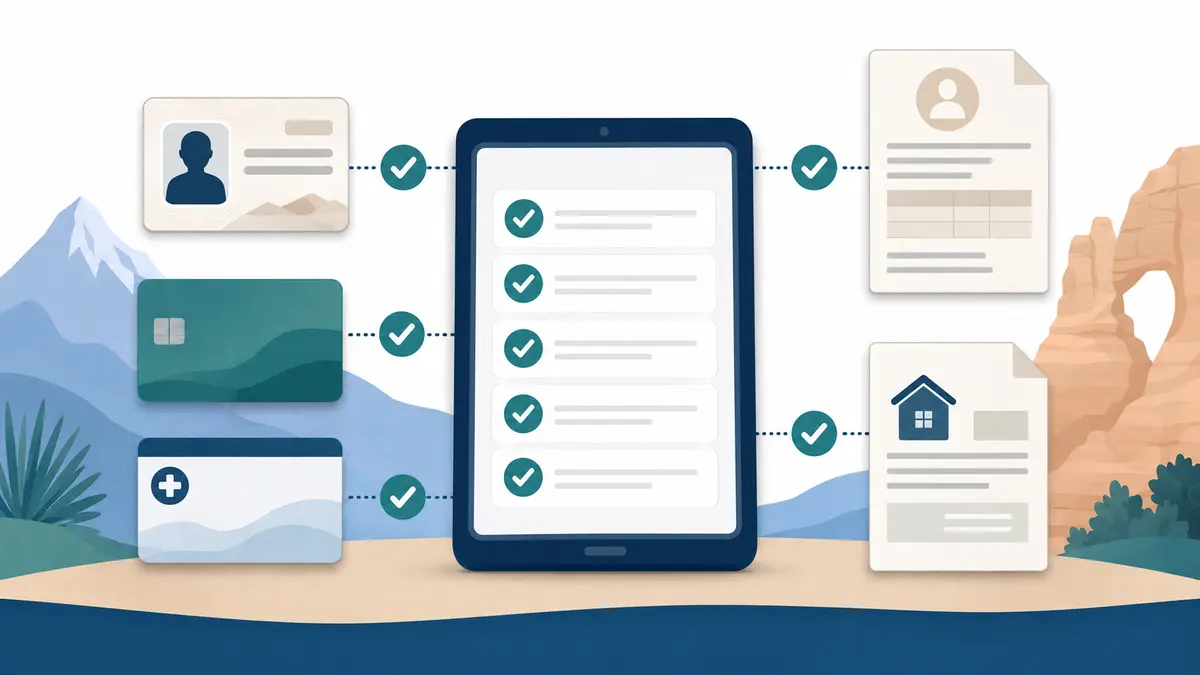
Choose SNAP, Medicaid, SSI, federal housing assistance, an accepted veterans benefit, a qualifying Tribal program, or household income. Do not rely on an unrelated benefit.
Confirm whether anyone who shares income and expenses at the address already receives Lifeline. Complete the household explanation if the official system requests it.
Use the same legal name, birth date, and physical residence shown on official records. Rural routes, Tribal addresses, new subdivisions, apartment units, and PO boxes can require extra attention.
Utah is not an opt-out application state like Oregon or Texas. Utah residents generally use the National Verifier online, by mail, or with help from a participating company.
If more proof is requested, upload it through the official system. Do not send an SSN, UtahID password, myCase password, EBT PIN, or bank information through social media or an unverified form.
After eligibility approval, compare companies for the exact service address and ask for written terms. Enrollment with a company is separate from National Verifier approval.
Ask about new or refurbished condition, operating system, stock, copay, activation, shipping, monthly service, data, returns, replacement policy, and total amount due.
Use the full safe application walkthrough for more detail.
Utah’s geography makes location checks important. The Wasatch Front has dense metro coverage, but the exact provider and building signal still vary. Southern red-rock communities, the Uintah Basin, canyon areas, mountain towns, remote western counties, and Tribal lands can have fewer choices, longer delivery routes, or address records that do not match commercial databases.
A ZIP code is only the first filter. Confirm the physical service address, apartment or unit, rural-route format, coverage at the place where the device will be used, and whether shipping can reach that address. Lifeline instructions require a home address rather than a PO box, although a separate mailing address may be entered where permitted. Applicants without a permanent address can follow official descriptive-address options.
| Location check | Why it matters in Utah | What to ask |
|---|---|---|
| ZIP code | Provider participation and service types vary across counties and communities. | Does the company currently offer Lifeline here? |
| Exact physical address | Coverage, apartment access, rural addressing, and Tribal land status may differ within one ZIP code. | Can the company validate this service location? |
| Network usability | Mountains, canyons, distance, and building construction can affect signal. | Which network is used, and is there a coverage or return policy? |
| Device inventory | Eligibility approval and tablet stock are separate systems. | Is a tablet available now, and is it new, refurbished, basic Android, or discounted? |
| Delivery terms | Remote routes and nonstandard addresses can affect shipping. | What is the cost, carrier, delivery estimate, signature rule, and return address? |
Use the local tablet availability guide. Provider pages such as StandUp Wireless, Assurance Wireless, SafeLink Wireless, and AirTalk Wireless explain commonly searched offers, but none should be treated as proof of current Utah availability.
Keep any useful Lifeline phone or internet discount even if the provider has no tablet. A stable connection can be more valuable than a low-spec device tied to unclear terms. You can also compare a low-cost refurbished tablet from a reputable seller without presenting it as government-issued.
Utah State Library supports equal access to library information and lists resources for residents, public libraries, the Library for the Blind and Disabled, and bookmobiles. A local library may offer computers, Wi-Fi, printing, scanning, digital skills help, or lending, but services and hours differ by location.
The Utah Broadband Center maintains statewide connectivity planning and a residential availability map. Community Action Partnership of Utah represents nine local Community Action Agencies that provide direct help by area. 211 Utah offers county-based referrals. These resources may identify internet, education, housing, utility, or digital support, but they do not guarantee a tablet.
The Utah Assistive Technology Program at Utah State University serves Utah residents with disabilities of all ages. It offers an assistive technology lending library, demonstrations, used-device exchange resources, financing help, and statewide services, including locations in Logan, Salt Lake City, and the Uintah Basin. A general-purpose tablet is not promised; support must relate to an individual access need and current inventory.
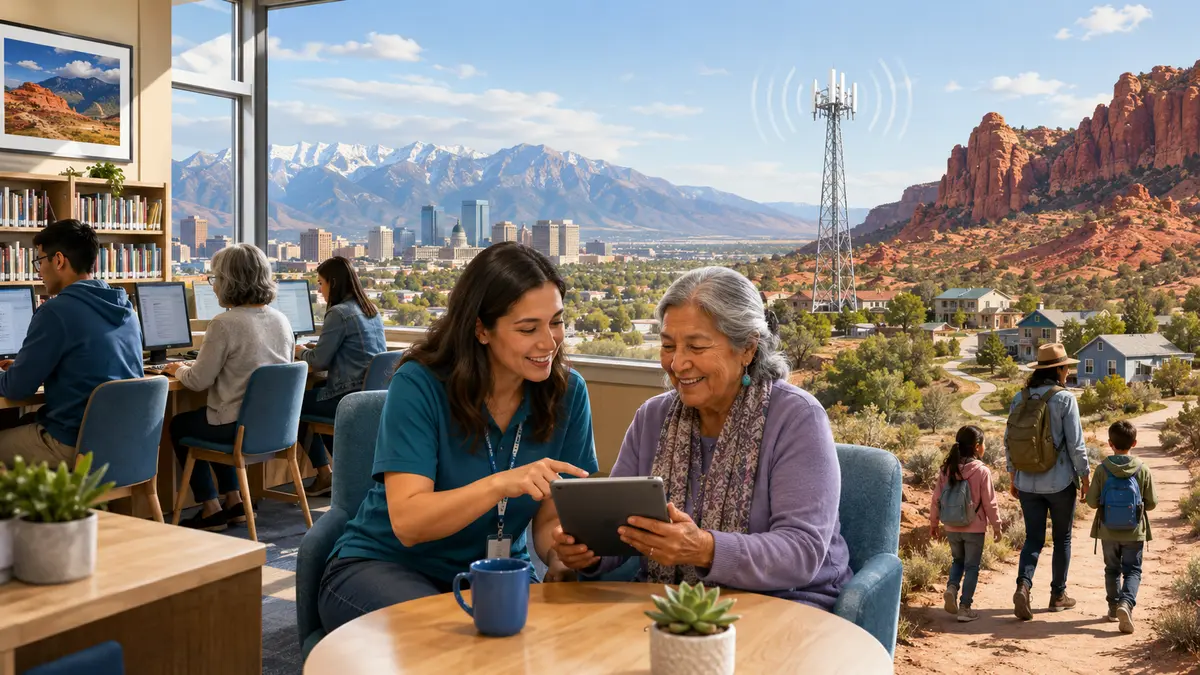
Call a local library to ask about computers, Wi-Fi, printing, scanning, device lending, training, and bookmobile stops.
Use 211 Utah or the CAP Utah network to identify services in the correct county rather than assuming one agency covers the whole state.
Ask UATP whether a demonstration, loan, used assistive device, adaptation, or financing resource fits a disability-related need.
Seniors may qualify through Medicaid, SNAP, SSI, income, housing assistance, Veterans Pension, or Survivors Benefit. A large display, keyboard, stand, speech access, hearing support, or training can matter more than the brand. Check the tablet options for seniors and consider Utah’s assistive technology and library resources.
Veterans Pension and Survivors Benefit are qualifying Lifeline routes. General veteran status is not enough by itself. Use a current qualifying benefit notice and review the tablet guide for veterans.
A child or dependent’s participation may help the household qualify under current rules. Enter information accurately, keep the adult applicant and dependent relationship clear, and remember that the one-per-household rule still applies.
Residents outside the Wasatch Front, in canyon communities, the Uintah Basin, central Utah, southeastern Utah, and remote western areas should verify network coverage, rural address recognition, shipping, and local access alternatives. A company name appearing in statewide marketing does not prove usable service at the home.
Qualifying Tribal lands may receive enhanced Lifeline support, and additional Tribal eligibility programs may apply. The exact residence and program matter. Utah’s eight Tribal nations and communities have distinct governments and service areas, so use official federal and Tribal information rather than treating all Native residents or locations alike.
Enrollment in school or college is not itself a Lifeline qualification. A student may qualify through household income or benefits. Libraries, colleges, workforce programs, and adult education providers may have computers or lending options, but availability must be checked directly.
Pause the application, save the suspicious claim, and confirm the company through official Lifeline resources. Contact the official Lifeline Support Center for application questions and the company through its verified contact information for device or billing questions.
A tablet may be available through a participating provider promotion, but Utah and the federal government do not guarantee one to every eligible resident. Confirm Lifeline eligibility, then verify service, stock, condition, copay, activation, and shipping for your exact address.
I could not confirm a separate official statewide Utah program that gives every qualifying resident a free tablet. Realistic options include Lifeline service, provider promotions, discounted devices, libraries, broadband resources, community agencies, and assistive technology support.
The Utah Horizon Card shows access to SNAP benefits, but it is not a tablet voucher. SNAP may establish Lifeline eligibility. A tablet remains dependent on a provider’s offer, coverage, approval, inventory, copay, activation, and shipping rules.
No general statewide Utah Medicaid tablet benefit was confirmed. Active Utah Medicaid can qualify a household for Lifeline, but any tablet is a separate provider promotion and may be discounted, refurbished, basic, out of stock, or unavailable.
No. The Affordable Connectivity Program ended, and households stopped receiving ACP discounts on June 1, 2024. An offer described as active “ACP 2026” enrollment should be treated as outdated or suspicious.
Utah residents generally apply through the federal National Verifier online, by mail, or with assistance from a participating phone or internet company. After eligibility is confirmed, they must enroll with a participating company to receive service.
You may need proof of identity, date of birth, physical address, income, or current participation in SNAP, Medicaid, SSI, federal housing, a qualifying veterans benefit, or a Tribal program. Names, dates, program details, and addresses should match the application.
Providers, networks, and shipping vary by location. Mountains, canyons, rural routes, Tribal lands, apartment units, and remote communities can affect address validation and usable service. Device inventory is separate from Lifeline eligibility.
No. A provider may offer a basic Android tablet, refurbished device, discounted model, phone, service only, or no tablet. Confirm the current written terms and inventory before paying or enrolling.
Not usually. Lifeline permits one benefit per economic household. People at the same address who do not share income and expenses may be separate households, but they may need to complete the official Household Worksheet.
Keep any useful Lifeline phone or internet service, compare a reputable low-cost refurbished device, and ask local libraries about computers or Wi-Fi. Utah Broadband Center, 211 Utah, Community Action Agencies, and the Utah Assistive Technology Program may identify other support.
Reject requests for an EBT PIN, UtahID password, myCase login, bank login, gift card, or cryptocurrency. Avoid guaranteed approval, fake government logos, active ACP claims, hidden provider names, and offers with no official verification route or written terms.
There is no verified statewide Utah program guaranteeing a free tablet. The strongest eligibility routes are SNAP, Medicaid, SSI, Federal Public Housing Assistance, Section 8, Veterans Pension, Survivors Benefit, qualifying Tribal assistance, and household income. Apply through the National Verifier, check a participating company at the exact physical address, and treat any tablet as a separate provider-dependent offer. If no device is available, use libraries, Utah Broadband Center resources, 211 Utah, local Community Action Agencies, or the Utah Assistive Technology Program.
Free Tablet Apply is independent and informational. Review the about page, disclaimer, or contact page. Do not send sensitive application credentials.
The links below are official federal or Utah government pages, a Utah public university program, or established statewide support organizations used to verify this guide. Rules, forms, contact details, and URLs can change. Recheck the destination before submitting personal information.
Last source review: July 31, 2026. Provider offers and local services can change after publication.